
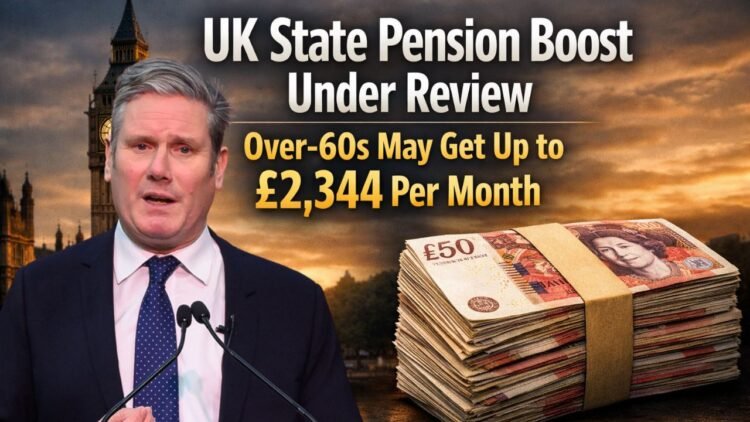
The UK State Pension debate has intensified, with growing headlines suggesting that over-60s could potentially receive £2,344 per month. For millions of retirees, the State Pension is not just a benefit — it forms the foundation of financial stability. But is this figure a confirmed policy shift or simply part of ongoing discussions amid the cost-of-living crisis?
This article breaks down the facts, explains the current DWP pension regulations, and explores whether such a dramatic increase is realistic.
Understanding the Current UK State Pension System

Navigating the Department for Work and Pensions (DWP) framework can be complicated. The transition from the Basic State Pension to the New State Pension, combined with the ongoing debate over the Triple Lock, has created confusion among pensioners.
A potential rate increase is more than just a numbers update. It reflects wider concerns about economic stability, inflation pressures, and ensuring dignity in retirement.
The Triple Lock Explained
How the Triple Lock Works
The Triple Lock system guarantees that the State Pension increases each April by the highest of:
- Average earnings growth
- Inflation (CPI)
- 2.5% minimum rise
This mechanism was introduced to protect pensioners from losing purchasing power due to inflation.
Can the Triple Lock Deliver £2,344 Per Month?
For the State Pension to reach £2,344 monthly, it would require:
- Sustained high wage growth
- Significant inflation spikes
- A political decision to raise the base pension beyond normal calculations
Currently, the full New State Pension stands far below this figure. Achieving over £28,000 annually would mean more than doubling present levels — something that would demand major fiscal restructuring.
Breaking Down the £2,344 Monthly Figure
If pensioners were to receive £2,344 per month, the annual pension would total approximately £28,128.
By comparison:
| Pension Type | Current Annual Rate | Monthly Equivalent |
|---|---|---|
| New State Pension | ~£11,502 | ~£958 |
| Proposed Review Figure | ~£28,128 | ~£2,344 |
This gap highlights the scale of change required.
Advocacy groups such as Silver Voices have pushed for aligning pensions with the National Living Wage, but such reforms would require comprehensive tax and public spending adjustments.
Cost of Living Crisis and Pension Pressure
The reason such proposals gain traction is simple: many pensioners struggle financially.
Despite recent increases of around 8.5%, rising energy bills, food inflation, and healthcare costs have eroded purchasing power. A higher pension rate would shift retirees from survival-level income toward financial comfort.
Compared to OECD countries, the UK’s State Pension remains modest relative to average earnings — fueling calls for reform.
State Pension Age and Eligibility
One major question is eligibility.
Currently:
- State Pension age is 66
- Scheduled to rise to 67 and 68
The suggestion of payments for over-60s is particularly noteworthy. Under current law, individuals cannot claim the State Pension at 60.
Lowering the pension age would represent a historic policy reversal and acknowledge that extended working lives are not feasible for everyone, particularly those in physically demanding occupations.
Basic vs New State Pension Differences
The UK currently operates a two-tier pension structure:
- Basic State Pension (pre-April 6, 2016 retirees)
- New State Pension (post-April 6, 2016 retirees)
The New State Pension requires 35 qualifying years of National Insurance contributions for full entitlement.
Any substantial increase would need to address fairness between these groups. Without consolidation, disparities would widen.
National Insurance Contributions and Qualification
To receive the maximum pension, individuals must have a strong National Insurance (NI) record.
Common issues include:
- Career breaks for caregiving
- Years spent abroad
- Part-time employment
Proposals for higher pensions may involve stricter NI requirements or expanded buy-back options for missing years. Checking your NI record through GOV.UK remains essential.
Inflation and Economic Conditions
Inflation plays a critical role in pension value.
Even a 10% pension rise can be negated if living costs increase faster. The Bank of England’s interest rate policy directly influences this balance.
Economic experts argue pensions must reflect elderly spending patterns, which prioritize:
- Heating
- Healthcare
- Essential goods
A proposed figure like £2,344 per month likely reflects projections of what constitutes a realistic living pension in future economic conditions.
Private Pensions and the Savings Gap
The State Pension was never designed to serve as sole income. However, many retirees — particularly those who did not benefit from Automatic Enrolment schemes — depend heavily on it.
A higher flat-rate pension could reduce reliance on:
- Pension Credit
- Means-tested benefits
- Council Tax support schemes
This could simplify administration and potentially reduce bureaucratic costs.
Political and Fiscal Challenges
Pensions are politically sensitive. Older voters are highly engaged in elections, making pension policy a key campaign issue.
However, the Treasury must weigh:
- Public debt levels
- Intergenerational fairness
- Tax burdens on younger workers
Funding a £2,344 monthly State Pension would likely require:
- Higher National Insurance contributions
- Increased taxation
- Cuts to other public services
These realities make immediate implementation unlikely.
What Should Over-60s Do Now?
While discussions continue, practical steps include:
- Obtain a State Pension forecast.
- Review your National Insurance record.
- Check eligibility for Pension Credit.
- Assess private pension contributions.
Maximizing current entitlements is crucial while waiting for policy updates.
Looking Ahead: Is Reform Inevitable?
The tone of pension debate has shifted from maintaining minimum support to ensuring dignified retirement.
Although £2,344 per month may not be imminent, momentum for reform continues to build. Future Spring and Autumn budget statements will clarify whether reviews translate into tangible increases.