
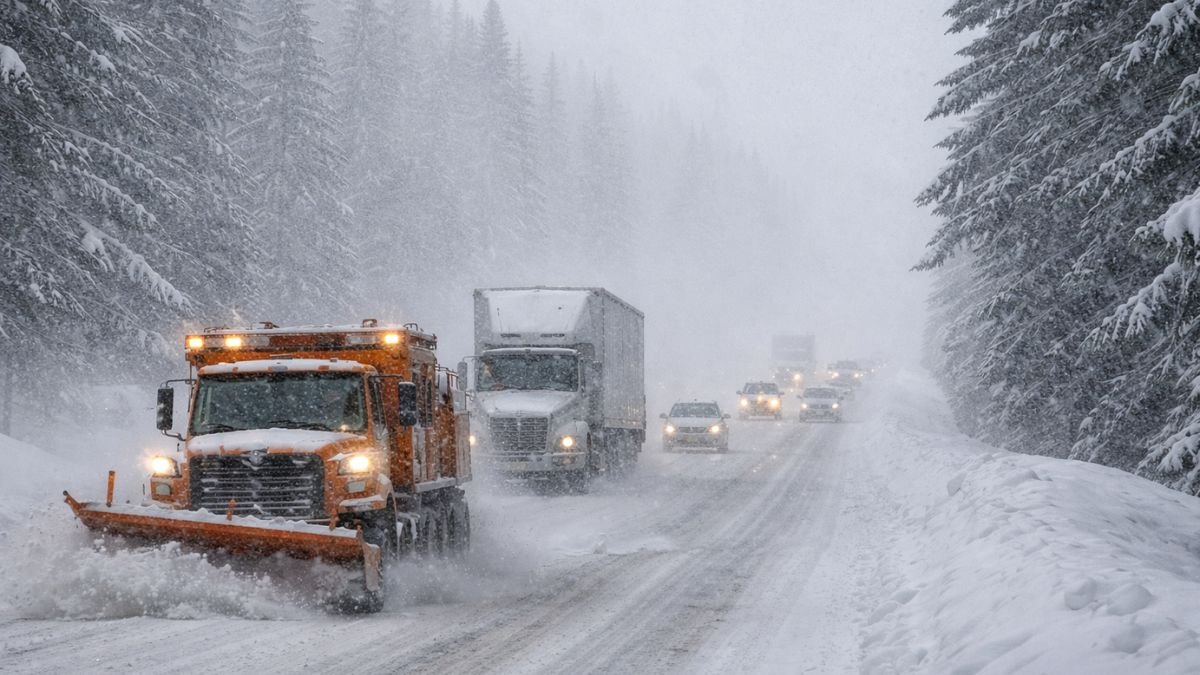
Meteorologists have issued a severe winter storm alert for several Western highway corridors, warning that a powerful weather system could bring up to 20 inches of snowfall and wind gusts reaching 40 miles per hour.
The combination of heavy snow and strong winds is expected to create dangerous travel conditions, whiteout visibility, and possible highway closures across high-elevation routes and interstate freight corridors.

Transportation officials are urging drivers to avoid non-essential travel, particularly across mountain passes where conditions can deteriorate rapidly.
The storm could become one of the most disruptive winter weather events of the season for Western transportation networks.
Heavy Snowfall Forecast for Western Regions
Weather agencies forecast snow accumulations ranging between 10 and 20 inches in several mountainous regions and elevated highways.

In some areas, snowfall rates may exceed one inch per hour during peak periods, which can quickly bury roadways and overwhelm snow-clearing operations.
Mountain passes and higher elevations are expected to receive the heaviest snow totals, increasing the risk of snow-packed roads and reduced traction. Even well-maintained highways may become hazardous within a short period of time as snow builds up.
Such heavy snowfall can cause:
- Rapid snow accumulation on road surfaces
- Reduced braking ability for vehicles
- Increased risk of vehicles becoming stuck
- Significant delays for freight and long-distance travelers
40 MPH Winds Could Create Blizzard-Like Conditions
In addition to heavy snowfall, wind gusts up to 40 mph are expected across affected regions. When strong winds combine with falling snow, they create blowing and drifting snow, which can drastically reduce visibility.
Drivers may experience near-zero visibility or whiteout conditions, especially in open areas and mountain corridors.
This dangerous combination of 20 inches of snow and strong winds increases the risk of:
- Multi-vehicle accidents
- Temporary highway closures
- Delays in emergency services
- Power outages in exposed areas
Large vehicles such as trucks, buses, and recreational vehicles are especially vulnerable to strong crosswinds on exposed highways.
Areas Most at Risk
Mountain Passes and Elevated Highways
High-altitude roads are particularly vulnerable to severe winter storms. These routes cool faster and accumulate snow more quickly than lower-elevation roads.
Drivers traveling through mountain corridors may encounter:
- Chain control checkpoints
- Reduced speed limits
- Avalanche monitoring zones
- Temporary highway shutdowns
Interstate Freight Corridors
Major interstate highways that transport goods across Western states could also be affected. Freight companies are already adjusting delivery routes to minimize delays caused by the storm.
Disruptions in these transport corridors could impact regional supply chains and shipping schedules.
Timeline of the Winter Storm
Meteorologists say the storm will intensify as cold Arctic air collides with incoming moisture systems. Snowfall is expected to begin lightly before becoming heavier and more sustained.
Peak impacts are expected during overnight and early morning hours, when temperatures will remain well below freezing, increasing the likelihood of icy road conditions.
Storm Impact Overview
| Impact Category | Forecast Details | Risk Level |
|---|---|---|
| Snowfall Totals | 10–20 inches | High |
| Wind Gusts | Up to 40 MPH | Moderate to High |
| Visibility | Near zero during peak snow | High |
| Road Conditions | Snow-packed and icy | Severe |
| Travel Delays | Widespread | High |
| Power Disruptions | Possible in exposed areas | Moderate |
How Travel Could Be Affected
Hazardous Driving Conditions
Drivers may face extremely difficult conditions due to:
- Black ice formation
- Snow drifts covering highway lanes
- Slippery bridges and overpasses
- Sudden visibility loss due to blowing snow
Even experienced winter drivers may struggle when heavy snowfall combines with strong winds.
Possible Highway Closures
Transportation authorities may temporarily close certain highway segments if snowfall exceeds the capacity of plowing operations.
Mountain regions that are prone to avalanches will also be closely monitored, and preventative closures may occur to ensure public safety.
Safety Tips for Drivers
Authorities recommend taking precautions if travel cannot be avoided.
Key safety recommendations include:
- Monitor weather forecasts regularly
- Carry an emergency kit with blankets, food, and water
- Keep fuel tanks at least half full
- Use winter tires or chains where required
- Inform others about your travel plans
Drivers unfamiliar with winter mountain driving should strongly consider delaying travel until conditions improve.
Why This Storm Is Especially Dangerous
What makes this storm particularly concerning is the combination of heavy snowfall and strong winds. While snow alone can disrupt transportation, strong winds can create deep snow drifts, sudden visibility loss, and uneven snow accumulation across highways.
Sub-freezing temperatures will also prevent snow from melting, allowing compacted snow to freeze into ice layers, making road clearing operations more difficult.
The severe winter storm forecast bringing up to 20 inches of snow and 40 MPH winds to Western highways poses a significant threat to travel safety. Mountain passes, interstate corridors, and rural roads are expected to face the greatest impacts.
Officials strongly advise travelers to stay informed, prepare for rapidly changing weather conditions, and avoid unnecessary travel during the storm.
Careful planning and preparedness will be essential in reducing risks as this powerful winter system moves through the region.
FAQs
How much snow is expected in this winter storm?
Meteorologists predict 10 to 20 inches of snow, with the heaviest snowfall expected in mountain passes and high-elevation highways.
Why are strong winds dangerous during snowstorms?
Wind gusts of up to 40 mph can blow snow across roads, creating whiteout conditions, deep snow drifts, and extremely poor visibility.
Should drivers avoid travel during the storm?
Yes. Authorities recommend avoiding non-essential travel, especially on mountain highways where conditions may become extremely dangerous.